Why Parents in Bergen County Ask So Many Questions About Older Pipes begins with a distinction that is easy to miss: municipal water can leave a treatment and distribution system with very little lead, yet collect lead after contacting service lines, solder, brass, galvanized scale, or older interior components. For parents and caregivers in Bergen County, the useful question is therefore not simply whether the city has lead pipes. It is how water travels through single-family homes, duplexes, and condominium buildings, how long it contacts each material, and which evidence can locate the most important contribution.
This article focuses on connecting older plumbing to formula preparation, cooking, school bottles, and repeated daily exposure. It does not treat building age, a service-line map, a visual pipe check, or one laboratory bottle as a complete answer by itself. Instead, it combines infrastructure records, water-use patterns, corrosion science, carefully selected samples, and responsibility boundaries. That approach supports protective action without turning every unknown into a claim that the entire property is contaminated.
Daily Child Water Use Changes the Bergen County Risk Conversation for Parents in Bergen County Ask So Many — Section 1
Parents think in routines rather than in plumbing diagrams. A child may drink water directly, consume it in soup and oatmeal, use it for toothbrushing, or receive formula mixed several times each day. These repeated uses make the condition of the kitchen tap and the water-contact path more important than a one-time taste test. Young children are especially important in lead prevention because developing bodies and brains are more vulnerable to exposure. Readers can compare this step with guidance on lead plumbing in cities when organizing the property record.
A family plan should identify which outlets supply drinking and cooking water, how long water commonly sits, whether a certified filter is used and maintained, and what is known about the service line and interior plumbing. Pediatric blood-lead testing is a health decision made with a healthcare professional; water testing answers a different question about one possible environmental source. Keeping those roles distinct avoids both false reassurance and unnecessary panic.
Drinking, Cooking, Brushing, and Formula Create Different Contact Patterns for Parents in Bergen County Ask So Many — Section 2
Lead concerns become concrete when attached to ordinary behavior. Water used for boiling pasta, filling a school bottle, making coffee, rinsing produce, brushing teeth, or mixing infant formula may come from the same tap but follow different timing patterns. A first use in the morning has usually contacted plumbing longer than a midday refill. Cooking does not remove lead, and boiling can concentrate dissolved substances as water evaporates. The current public framework is summarized in EPA’s Lead and Copper Rule Improvements.
Households can create a simple use map showing which taps serve consumption, how often they are used, and whether water stands for long periods. That map helps prioritize testing and interim controls. It also prevents attention from being scattered across low-relevance outlets while the primary kitchen or beverage tap remains unevaluated.
Solder, Brass, Galvanized Pipe, and Fixtures Inside the Building for Parents in Bergen County Ask So Many — Section 3
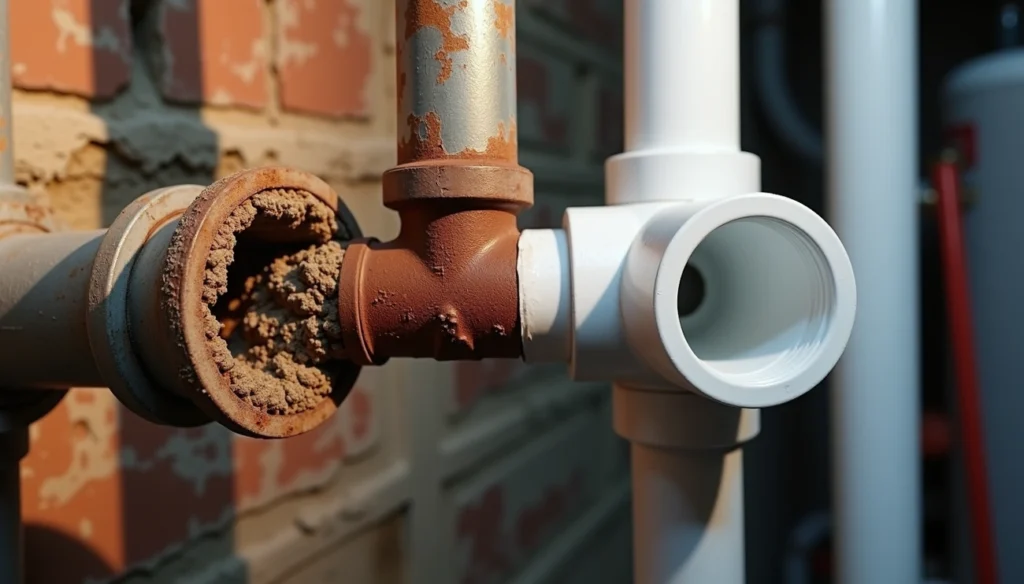
Lead exposure from plumbing is not limited to a visibly soft lead pipe. Older solder can join copper tubing, brass fixtures can contain lead, galvanized pipe may retain lead-rich scale after being downstream of a lead service line, and valves or meters can introduce additional alloys. Renovation can remove one source while leaving several others. The phrase older pipes should therefore be translated into a component inventory. Readers can compare this step with the infrastructure and replacement guide when organizing the property record.
Component-level thinking changes the repair strategy. Families who apply the rigorous standards of certified home water testing in Manhattan to their regional residences gain actionable clarity on plumbing health. Replacing a faucet may reduce a fixture contribution but will not correct a lead service line. Replacing the service line may remove the largest source while leaving older soldered joints. Sampling before and after work, paired with accurate material records, helps show whether the chosen intervention addressed the dominant pathway.
What Several Quiet Hours Can Do at a Residential Tap for Parents in Bergen County Ask So Many — Section 4
Water that remains motionless in plumbing has more time to interact with pipe scale, solder, and fixture components. Overnight stagnation is especially relevant because it is predictable, but daytime inactivity in a rarely used bathroom or vacant unit may be longer. Temperature, pipe volume, corrosion control, and the exact sequence of household use all influence the resulting concentration. The current public framework is summarized in CDC guidance on lead in drinking water.
A defined stagnation period makes samples more comparable, yet real-life exposure may include both stagnant and frequently refreshed water. That is why a thoughtful plan may include first-draw and flushed conditions rather than relying on one bottle. Residents should not create unusual stagnation solely to produce a dramatic result; the protocol should reflect the question and laboratory instructions.
A Sample Plan Built Around Connecting Older Plumbing To Formula Preparation, Cooking, School Bottles, And Repeated Daily Exposure for Parents in Bergen County Ask So Many — Section 5
Lead sampling is most useful when the bottle is tied to a specific question. A first-draw sample after a defined stagnation period emphasizes water that has been in contact with the local faucet and nearby plumbing. A follow-up sample after controlled flushing may shift attention farther upstream. Additional sequential samples can sometimes help locate where lead-bearing material may be contributing, but they require careful planning because water volume, pipe diameter, fixture aerators, and household use all affect interpretation. Readers can compare this step with answers to common lead-pipe questions when organizing the property record.
The sample plan for single-family homes, duplexes, and condominium buildings should record the tap, date, stagnation time, recent plumbing work, temperature, aerator status, and whether the outlet is normally used for drinking or cooking. Laboratories should be selected for appropriate drinking-water lead analysis, and chain-of-custody instructions must be followed. More bottles do not automatically mean better evidence; the value comes from selecting locations and timing that can separate competing explanations.
Certified Filtration as a Managed Control, Not a Pipe Diagnosis for Parents in Bergen County Ask So Many — Section 6
A point-of-use filter can reduce lead exposure when it is independently certified for lead reduction and operated exactly as specified. Certification claims should match the contaminant, and cartridges must be changed on schedule. A filter with an expired cartridge, incorrect installation, or flow rate outside the design range may not provide the expected protection. The current public framework is summarized in NJDEP’s lead and drinking-water guidance.
Filtration does not identify pipe material or repair a service line. It is best treated as a managed control with a purchase record, cartridge log, and clear assignment of responsibility. In rental and shared-building settings, residents also need to know who supplies replacements and how continuity will be maintained during vacations, turnover, or maintenance.
From Partial Repair to Complete Lead-Bearing Material Removal for Parents in Bergen County Ask So Many — Section 7
Permanent risk reduction centers on removing lead-bearing material rather than managing contact forever. Replacement planning should define the full segment to be removed, who owns each portion, how the building will remain supplied, and what flushing and follow-up sampling will occur. Partial service-line replacement can disturb scale and create galvanic conditions, so coordination between utility and property work is critical. Readers can compare this step with professional water-testing support when organizing the property record.
Interior work should also be sequenced. Contractors need to identify lead solder, brass components, galvanized sections, and fixtures likely to contribute. After construction, debris control, flushing, aerator cleaning, and post-work sampling should be documented. A replacement project is complete only when the physical work and the water-quality follow-up support the same conclusion.