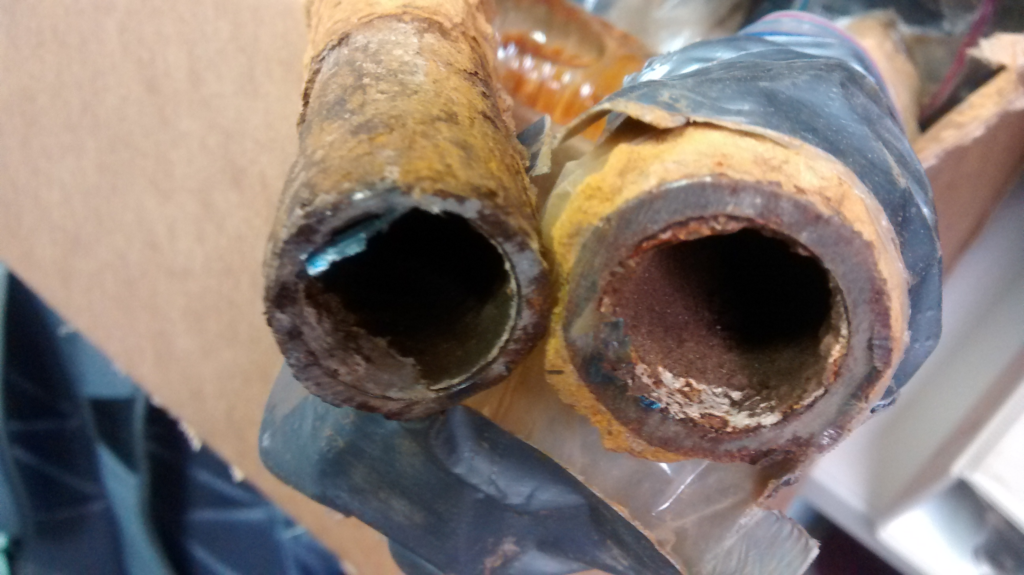
A Brooklyn Guide to Lead Pipe Concerns for Condominium Owners begins with a distinction that is easy to miss: municipal water can leave a treatment and distribution system with very little lead, yet collect lead after contacting service lines, solder, brass, galvanized scale, or older interior components. For condominium owners, boards, and prospective buyers in Brooklyn, the useful question is therefore not simply whether the city has lead pipes. It is how water travels through condominium units in converted and purpose-built buildings, how long it contacts each material, and which evidence can locate the most important contribution.
This article focuses on distinguishing owner-controlled fixtures from common risers, cellar mains, and service connections. It does not treat building age, a service-line map, a visual pipe check, or one laboratory bottle as a complete answer by itself. Instead, it combines infrastructure records, water-use patterns, corrosion science, carefully selected samples, and responsibility boundaries. That approach supports protective action without turning every unknown into a claim that the entire property is contaminated.
Unit Components and Common Elements in the Condominium Water Path for Brooklyn Guide to Lead Pipe Concerns for — Section 1
A condominium divides plumbing into unit-owned and common elements, but the water moves through both without respecting the legal boundary. The faucet, connector, and some branches may belong to the unit, while risers, pumps, cellar piping, and the service connection may belong to the association. Converted buildings add another complication because units may have different renovation histories. Readers can compare this step with professional water-testing support when organizing the property record.
Owners should review declarations, alteration agreements, capital plans, and prior testing alongside the physical plumbing map. Comparable samples from selected units can test whether a result follows one fixture, one riser, or a broader system. This evidence helps the board fund the right scope instead of shifting uncertainty between owners.
Mapping the Shared Water Path Behind Brooklyn Guide to Lead Pipe Concerns for Condominium for Brooklyn Guide to Lead Pipe Concerns for — Section 2
In Brooklyn, a shared building can place several plumbing layers between the municipal main and one kitchen faucet. Water may pass through a property service line, a cellar header, pressure equipment, a vertical riser, a horizontal branch, shutoff valves, flexible connectors, and the fixture itself. A result from one outlet therefore describes one route at one moment; it does not automatically describe every unit. The useful first task is to draw a simple building map showing floors, risers, renovated units, mechanical rooms, and the location of complaints or prior results. The current public framework is summarized in EPA’s Lead and Copper Rule Improvements.
Comparison points should be chosen to test that map. Two units on the same riser may reveal a vertical pattern, while units at similar elevations on different risers can test whether the issue is more widespread. A basement or service-entry sample may add context, but it cannot replace first-draw samples at occupied taps. The goal is to distinguish a local fixture contribution from a shared pathway without promising more certainty than the evidence supports.
Responsibility Boundaries Across Condominium Units In Converted And Purpose-Built Buildings for Brooklyn Guide to Lead Pipe Concerns for — Section 3
Plumbing responsibility rarely follows the path of the water in a simple way. A resident may control the faucet and flexible supply line, while the association, co-op, landlord, or utility controls other segments. Governing documents may define common elements differently from what a plumber sees in the wall. That is why condominium owners, boards, and prospective buyers should document both the physical route and the legal boundary before assigning blame or authorizing work. Readers can compare this step with a plain-language explanation of lead-bearing plumbing when organizing the property record.
A practical responsibility table can list each segment, its known or suspected material, who maintains it, and what evidence exists. Ordering specialized water testing for condominiums in Brooklyn ensures that unit owners and HOA boards obtain clear data identifying which plumbing components require attention. This prevents a unit owner from replacing a faucet while ignoring a riser question, and it prevents management from describing a building-wide concern when only one connector has been evaluated. Clear boundaries also help determine who receives the laboratory report, who communicates with occupants, and who can approve replacement.
Records That Can Reconstruct the Hidden Plumbing History for Brooklyn Guide to Lead Pipe Concerns for — Section 4
Old plumbing is often documented indirectly. Building permits, street-opening records, water-system inventories, renovation invoices, board minutes, capital plans, inspection photographs, and plumber reports can each reveal part of the history. The most useful record is not always the newest one; an older sketch may show a service route that later cosmetic plans omit. Records should be dated and treated as evidence with limits rather than as absolute proof. The current public framework is summarized in CDC guidance on lead in drinking water.
For Brooklyn, create a chronology rather than a loose folder. Note when the service line was installed or repaired, when kitchens and bathrooms were renovated, whether risers were replaced, and whether any lead or unknown-material notices were issued. This chronology can explain why a seemingly modern unit remains connected to older common piping and can help a laboratory professional choose sample points that correspond to real construction phases.
A Sample Plan Built Around Distinguishing Owner-Controlled Fixtures From Common Risers, Cellar Mains, And Service Connections for Brooklyn Guide to Lead Pipe Concerns for — Section 5
Lead sampling is most useful when the bottle is tied to a specific question. A first-draw sample after a defined stagnation period emphasizes water that has been in contact with the local faucet and nearby plumbing. A follow-up sample after controlled flushing may shift attention farther upstream. Additional sequential samples can sometimes help locate where lead-bearing material may be contributing, but they require careful planning because water volume, pipe diameter, fixture aerators, and household use all affect interpretation. Readers can compare this step with the household health-risk overview when organizing the property record.
The sample plan for condominium units in converted and purpose-built buildings should record the tap, date, stagnation time, recent plumbing work, temperature, aerator status, and whether the outlet is normally used for drinking or cooking. Laboratories should be selected for appropriate drinking-water lead analysis, and chain-of-custody instructions must be followed. More bottles do not automatically mean better evidence; the value comes from selecting locations and timing that can separate competing explanations.
Building a Written Record That Residents and Managers Can Use for Brooklyn Guide to Lead Pipe Concerns for — Section 6
Lead communication should be specific enough to guide action and calm enough to preserve trust. Notices should state what prompted the review, which fixtures were sampled, the protocol used, the result units, immediate precautions, and the next scheduled step. Phrases such as everything is safe or the whole building has lead are rarely justified by limited evidence. The current public framework is summarized in NYC DEP guidance on lead and drinking water.
Residents also need a channel for reporting relevant details: floor, unit line, faucet, stagnation, recent work, filter use, and household concerns. A dated log prevents the investigation from being rebuilt from memory each time a new person becomes involved. For boards and managers, consistent records also support contractor scope, budgeting, and regulatory communication.
From Partial Repair to Complete Lead-Bearing Material Removal for Brooklyn Guide to Lead Pipe Concerns for — Section 7
Permanent risk reduction centers on removing lead-bearing material rather than managing contact forever. Replacement planning should define the full segment to be removed, who owns each portion, how the building will remain supplied, and what flushing and follow-up sampling will occur. Partial service-line replacement can disturb scale and create galvanic conditions, so coordination between utility and property work is critical. Readers can compare this step with the lead-pipe research blog when organizing the property record.
Interior work should also be sequenced. Contractors need to identify lead solder, brass components, galvanized sections, and fixtures likely to contribute. After construction, debris control, flushing, aerator cleaning, and post-work sampling should be documented. A replacement project is complete only when the physical work and the water-quality follow-up support the same conclusion.