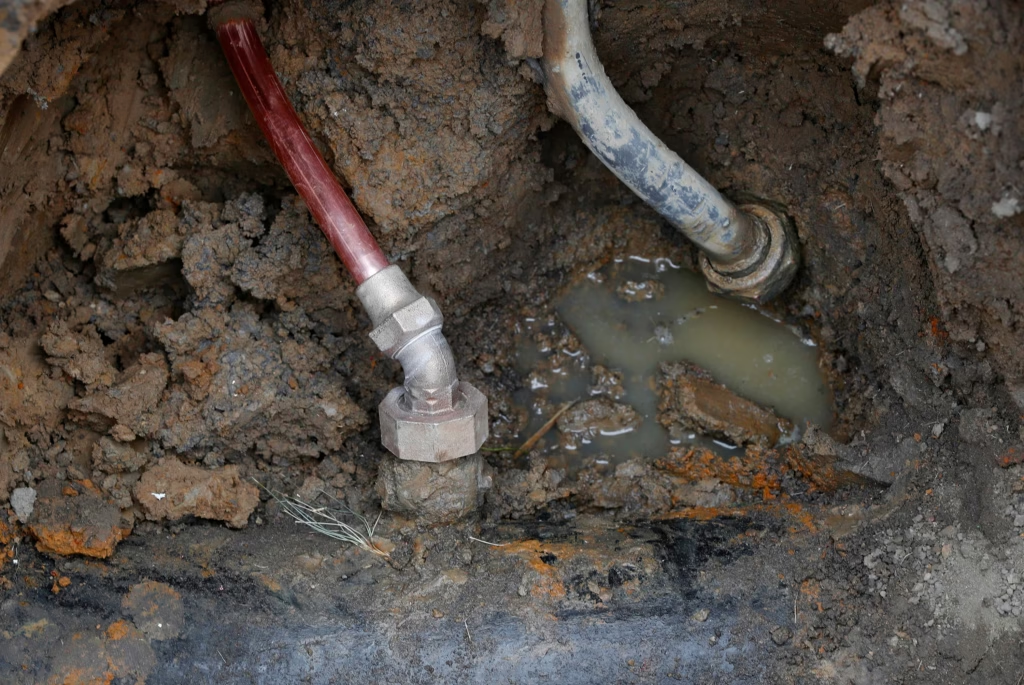
Why Lead Pipes and Interior Plumbing Both Matter begins with a distinction that is easy to miss: municipal water can leave a treatment and distribution system with very little lead, yet collect lead after contacting service lines, solder, brass, galvanized scale, or older interior components. For owners who may be focusing on only one part of the water path in older municipal service areas, the useful question is therefore not simply whether the city has lead pipes. It is how water travels through private homes and multifamily properties, how long it contacts each material, and which evidence can locate the most important contribution.
This article focuses on explaining how service lines, solder, brass fixtures, galvanized pipe, and interior branches can each contribute. It does not treat building age, a service-line map, a visual pipe check, or one laboratory bottle as a complete answer by itself. Instead, it combines infrastructure records, water-use patterns, corrosion science, carefully selected samples, and responsibility boundaries. That approach supports protective action without turning every unknown into a claim that the entire property is contaminated.
Where the Street Connection Enters the older municipal service areas Lead Question for Lead Pipes and Interior Plumbing Both Matter — Section 1
The service line is the pipe connecting the street main to the building, and its material may differ on the utility-owned and property-owned sides. Lead, galvanized steel that was once downstream of lead, copper, and other materials may appear in local inventories. Service-line records are valuable, but a record marked unknown is not proof that lead is present, and a record marked non-lead does not evaluate solder, fixtures, or interior components. The service connection belongs in the investigation because it defines the first privately influenced part of the water route. Readers can compare this step with a plain-language explanation of lead-bearing plumbing when organizing the property record.
Ownership rules and replacement programs vary by municipality. A complete decision therefore combines inventory information, physical inspection where appropriate, licensed-plumber input, and tap sampling designed for the property. Partial replacement requires special care because disturbing an old line or joining different metals can alter scale and release particles. Permanent removal of lead-bearing service material is an infrastructure solution; flushing and filtration are exposure controls while that solution is being planned.
Solder, Brass, Galvanized Pipe, and Fixtures Inside the Building for Lead Pipes and Interior Plumbing Both Matter — Section 2
Lead exposure from plumbing is not limited to a visibly soft lead pipe. Older solder can join copper tubing, brass fixtures can contain lead, galvanized pipe may retain lead-rich scale after being downstream of a lead service line, and valves or meters can introduce additional alloys. Renovation can remove one source while leaving several others. The phrase older pipes should therefore be translated into a component inventory. The current public framework is summarized in EPA’s lead service line resources.
Component-level thinking changes the repair strategy. Replacing a faucet may reduce a fixture contribution but will not correct a lead service line. Replacing the service line may remove the largest source while leaving older soldered joints. Sampling before and after work, paired with accurate material records, helps show whether the chosen intervention addressed the dominant pathway.
How Water Chemistry Changes Lead Release in older municipal service areas for Lead Pipes and Interior Plumbing Both Matter — Section 3
Lead does not usually enter finished municipal water at the reservoir or treatment plant. It is released when water contacts lead-bearing service lines, solder, brass, or other plumbing materials. The rate is controlled by chemistry and hydraulics: pH, alkalinity, orthophosphate treatment, chloride-to-sulfate balance, dissolved oxygen, temperature, stagnation, scale condition, and galvanic connections can all change how much lead dissolves or detaches as particles. Readers can compare this step with the household health-risk overview when organizing the property record.
This chemistry explains why two neighboring properties can produce different results even when they receive the same source water. Each building has its own material inventory, water age, renovation history, and usage pattern. Requesting Manhattan on-site water testing services helps property managers trace how localized stagnation affects water chemistry between adjacent units. Corrosion control at the water-system level is essential, but it cannot convert an unknown private plumbing path into a known one. Property-specific evidence remains necessary when the question concerns one household or one building.
Following Water From the Main to the Most-Used Faucet for Lead Pipes and Interior Plumbing Both Matter — Section 4
A clear investigation follows the water in order: municipal main, utility-side service segment, property-side service segment, meter, building main, vertical or horizontal distribution, branch line, shutoff, connector, and fixture. Each segment has a different age, material, water-contact time, and owner. Skipping that route encourages false choices such as assuming the concern must be either the city main or the kitchen faucet. The current public framework is summarized in CDC guidance on lead in drinking water.
For private homes and multifamily properties, mark the most-used drinking outlets and the points where pipe material changes. A short copper branch fed by an older galvanized riser is not equivalent to an all-copper path, and a new faucet may still receive water through lead-soldered joints. This route map gives meaning to sample timing and helps explain why two taps in the same property may not behave alike.
A Sample Plan Built Around Explaining How Service Lines, Solder, Brass Fixtures, Galvanized Pipe, And Interior Branches Can Each Contribute for Lead Pipes and Interior Plumbing Both Matter — Section 5
Lead sampling is most useful when the bottle is tied to a specific question. A first-draw sample after a defined stagnation period emphasizes water that has been in contact with the local faucet and nearby plumbing. A follow-up sample after controlled flushing may shift attention farther upstream. Additional sequential samples can sometimes help locate where lead-bearing material may be contributing, but they require careful planning because water volume, pipe diameter, fixture aerators, and household use all affect interpretation. Readers can compare this step with the lead-pipe research blog when organizing the property record.
The sample plan for private homes and multifamily properties should record the tap, date, stagnation time, recent plumbing work, temperature, aerator status, and whether the outlet is normally used for drinking or cooking. Laboratories should be selected for appropriate drinking-water lead analysis, and chain-of-custody instructions must be followed. More bottles do not automatically mean better evidence; the value comes from selecting locations and timing that can separate competing explanations.
Reading Laboratory Numbers Without Losing the Property Context for Lead Pipes and Interior Plumbing Both Matter — Section 6
A laboratory concentration is a measured result for a defined bottle, not a permanent label for the entire property. Interpretation should consider the sampling protocol, reporting limit, units, stagnation duration, recent flushing, fixture use, and whether the result may include particulate lead. Comparing a household result directly with a system-wide regulatory action level can be misleading because compliance sampling and individual risk decisions serve different purposes. The current public framework is summarized in EPA’s Lead and Copper Rule Improvements.
A useful interpretation separates three questions: whether lead was detected under the sampled conditions, where the contributing material may be located, and what response is proportionate. Trends across fixtures and sample stages may be more informative than one isolated number. The report should also explain uncertainty in ordinary language so that owners who may be focusing on only one part of the water path can act without treating a single result as either catastrophe or permanent clearance.
From Partial Repair to Complete Lead-Bearing Material Removal for Lead Pipes and Interior Plumbing Both Matter — Section 7
Permanent risk reduction centers on removing lead-bearing material rather than managing contact forever. Replacement planning should define the full segment to be removed, who owns each portion, how the building will remain supplied, and what flushing and follow-up sampling will occur. Partial service-line replacement can disturb scale and create galvanic conditions, so coordination between utility and property work is critical. Readers can compare this step with the practical lead-pipe resources when organizing the property record.
Interior work should also be sequenced. Contractors need to identify lead solder, brass components, galvanized sections, and fixtures likely to contribute. After construction, debris control, flushing, aerator cleaning, and post-work sampling should be documented. A replacement project is complete only when the physical work and the water-quality follow-up support the same conclusion.